

I work with operations managers across the Greater Toronto Area who face this exact situation. The building’s basic cleaning service does the minimum. Employees start grumbling. And at some point, you realize you’re spending mental energy on something that should just work. According to workplace hygiene statistics from Canada Safety Training, 94% of workers say they feel more productive in a clean workspace. That’s not surprising—but what is surprising is how many businesses tolerate mediocre cleaning for years before making a change.
What Actually Changes When You Hire Professional Cleaners
I’ll be honest: the first thing most people expect is that their office will look cleaner. And yes, it will. But the changes that actually matter show up in ways you don’t immediately see.

I worked with Marcus, an operations manager at a Mississauga tech startup with about 50 people. His situation was textbook: the in-house cleaning arrangement had become inconsistent, employees were complaining about dust and washroom conditions, and he’d started dreading client visits. The initial pushback from leadership was predictable—”We’re already paying for cleaning, why pay more?”
Three months after switching to a professional cleaning service, his employee satisfaction survey showed a 34% improvement in workspace comfort scores. That number caught leadership’s attention in a way that “the washrooms are cleaner” never would have.
Before: Dust accumulating on desks by Wednesday. Kitchen sink perpetually grimy. Washroom soap running out. Employee complaints in Slack.
After: Consistent daily standards. Consumables always stocked. Fewer sick days. Clients commenting positively on the office environment.
The connection between professional cleaning for business image and how clients perceive your company is worth understanding. It’s not just about appearances—it’s about what those appearances signal about how you run your operation.
Here’s what I’ve noticed across dozens of transitions: the real shift isn’t just cleanliness. It’s that you stop thinking about it. Your mental bandwidth goes back to running the business instead of wondering whether someone remembered to empty the kitchen garbage.
The Three Things That Separate Reliable Services from Headaches
In my experience working with facility managers across the GTA, one of the most common regrets I hear is choosing a cleaning service purely on price. Within a few months, they’re dealing with inconsistent results or worse—discovering their provider wasn’t properly insured. This pattern holds for small to medium office spaces, though larger enterprises often have procurement processes that catch these issues earlier.
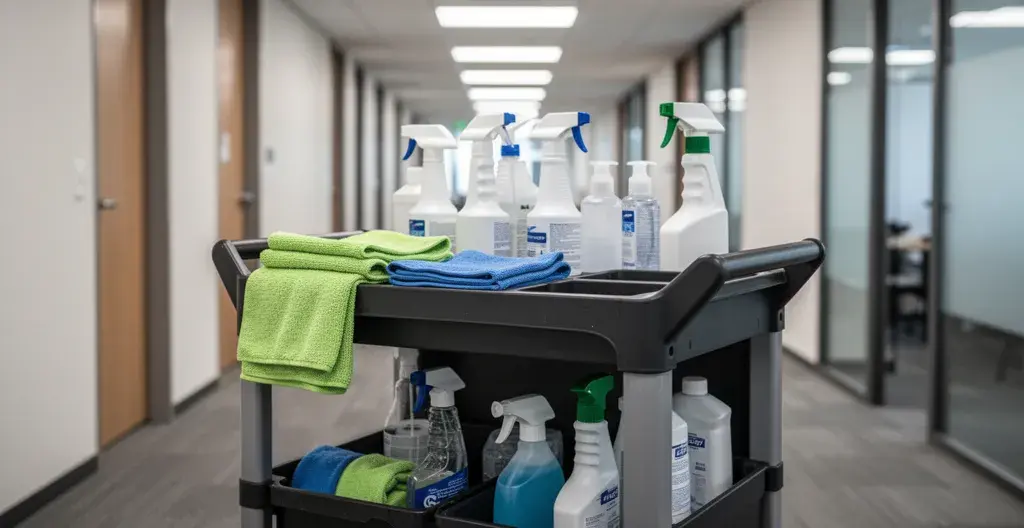
So what actually matters when you’re evaluating companies? Three things—and honestly, if you get these right, most of the other details sort themselves out.
First: Insurance and WSIB coverage. According to commercial cleaner insurance requirements outlined by industry specialists, if a cleaning company doesn’t have WSIB coverage and their janitor has an accident on your premises, your company can be held liable. That’s not a theoretical risk. Ask for the certificate. Verify it’s current. Reputable companies provide this without hesitation.
Second: A detailed scope of work. Vague agreements lead to frustration. Before signing any cleaning contract, you need specifics: what’s cleaned, how often, and what “clean” actually means in measurable terms. I’ve seen contracts that said “clean washrooms daily” where the vendor interpreted that as emptying the garbage and nothing else.
Third: Background checks and access protocols. These people are in your office after hours. They have keys. Services like those offered at sunrise-cleaning.com demonstrate the professional standards to look for—bonded staff, documented procedures, clear accountability.
Questions to ask before signing anything
-
Request current WSIB clearance certificate and $2M liability insurance documentation
-
Ask specifically about employee background check policies
-
Get a written scope of work with frequency and measurable standards
-
Confirm access protocols and key handling procedures
-
Ask about their satisfaction guarantee and dispute resolution process
Red flags? Any hesitation about providing insurance documentation. Reluctance to give client references. Scope descriptions that sound vague (“We’ll keep things clean”). No quality guarantee or feedback mechanism. If you see these, keep looking.
From First Call to Established Routine: What the Transition Looks Like
In my experience, expect a 4-8 week adjustment period when transitioning to a new commercial cleaning service. The first deep clean addresses accumulated issues—and frankly, it can be a bit eye-opening to see what’s been hiding under desks and behind equipment. Subsequent weeks refine the routine based on your specific needs.
-
Initial consultation and walkthrough—the provider assesses your space and specific needs -
Custom proposal and quote—this should include the detailed scope of work -
Contract signing and scheduling—coordinate access, keys, alarm codes -
First deep clean—expect this to take longer than regular visits -
Adjustment period and feedback loop—communicate what’s working and what needs tweaking
I remember working with Sandra, a dental office manager in Oakville who had specific concerns about compliance. Her previous cleaning service was missing areas behind equipment—a potential issue in a medical setting. The new service was more expensive and required after-hours access coordination that took some figuring out. Ultimately, she found a balance with bi-weekly deep cleans plus daily light cleaning. Cost increased about 20%, but the compliance peace of mind was worth it. Healthcare spaces genuinely need specialized protocols—general commercial cleaning doesn’t cut it.
According to the 2025 commercial cleaning rates guide, small offices in Ontario typically pay around $0.10-$0.15 per square foot, while larger buildings can go up to $0.20 or more. Monthly costs range from $100-$500 for spaces under 1,000 square feet to $2,000-$5,000+ for buildings over 5,000 square feet. Labour rates run higher in Toronto and Mississauga due to cost of living—budget accordingly.
Practical note: Most commercial cleaning is scheduled for after business hours. It’s more efficient for the cleaners and less disruptive for your team. Discuss scheduling options during your consultation—flexibility here often depends on building access arrangements.
Common Questions About Commercial Cleaning Services
Your questions about commercial cleaning services
How do I verify a cleaning company is properly insured in Ontario?
Request their WSIB clearance certificate and general liability insurance documentation (industry standard is $2M minimum). Reputable companies provide these proactively. You can verify WSIB coverage directly through the WSIB’s online clearance system.
What should be included in a commercial cleaning contract?
At minimum: detailed scope of work (what’s cleaned and how often), frequency of service, pricing and payment terms, access protocols, quality standards, satisfaction guarantee or remediation process, and termination terms. Avoid vague language.
How long before results stabilize with a new cleaning service?
Typically 4-8 weeks. The first visit addresses accumulated issues. Subsequent weeks involve feedback and refinement. Plan to communicate actively during this period—don’t assume they’ll magically know your preferences.
Are there new Ontario requirements for workplace hygiene documentation?
Yes. According to Ontario government requirements, as of January 1, 2026, employers must keep and make available records showing the date and time of the two most recent washroom cleanings. These must be posted visibly where workers can see them.
A clean workspace is one component of a supportive work environment. Explore related well-being improvements at work that complement your environment upgrade.
The next step for your workspace
If your current cleaning situation has you spending mental energy on something that should just work—whether it’s employee complaints, client impressions, or simply the frustration of inconsistency—you already know something needs to change.
Start with the checklist above. Get quotes from at least three providers. Ask the uncomfortable questions about insurance and background checks. And give any new service a fair 4-8 weeks to establish a routine before judging results.
The businesses I work with who’ve made this transition successfully have one thing in common: they treated cleaning as an operational decision, not a commodity purchase. The difference shows.